
featured · pre orders
Television Behaviour Controller
The final answer to blue screens of death
- Stable, standards compliant video output, even when the input loses sync
- 3 selectable video inputs
- 2 independently buffered composite video outputs, plus HDMI
- PAL, NTSC and SECAM support
- Onboard image controls
- Built in digital video effects
- USB-C powered
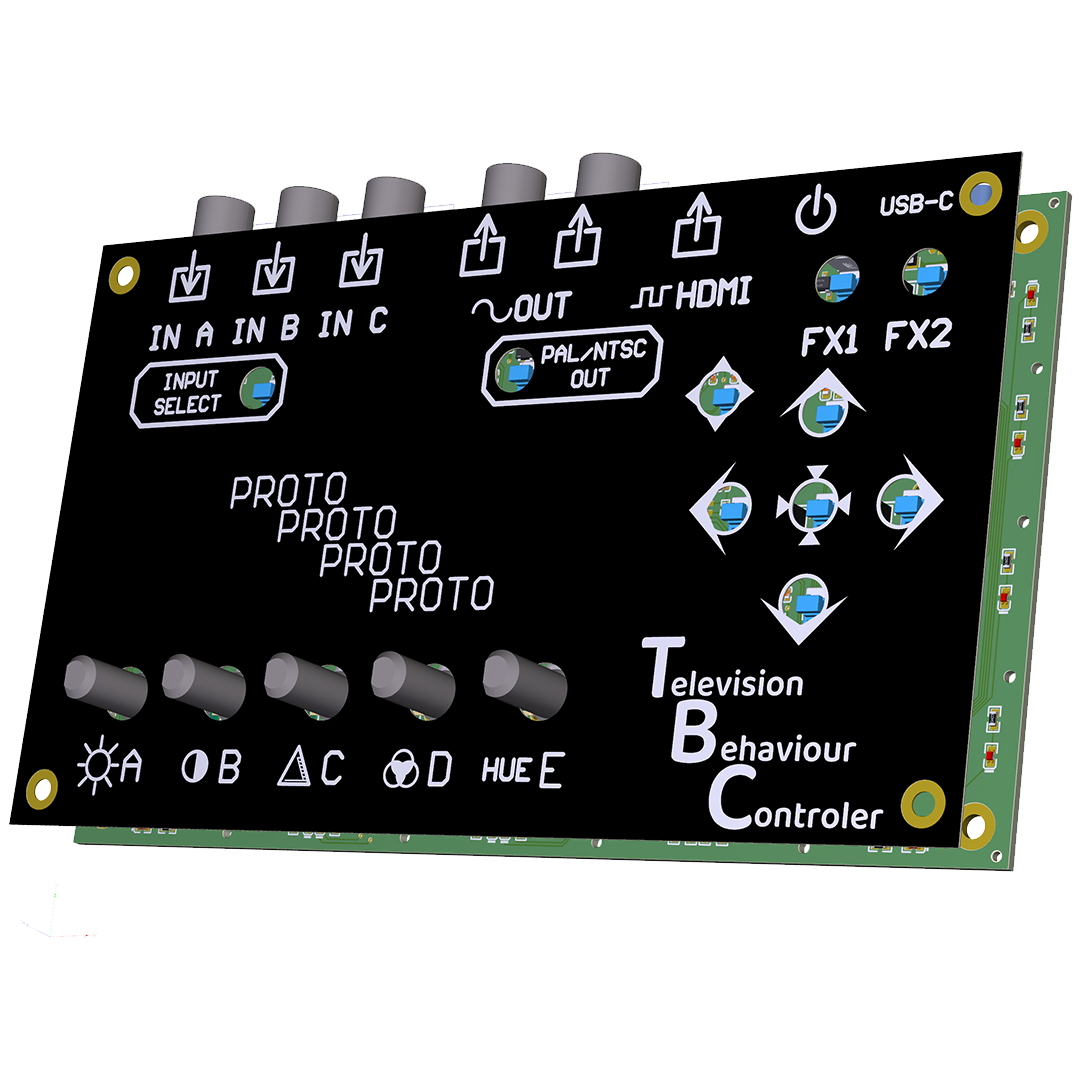
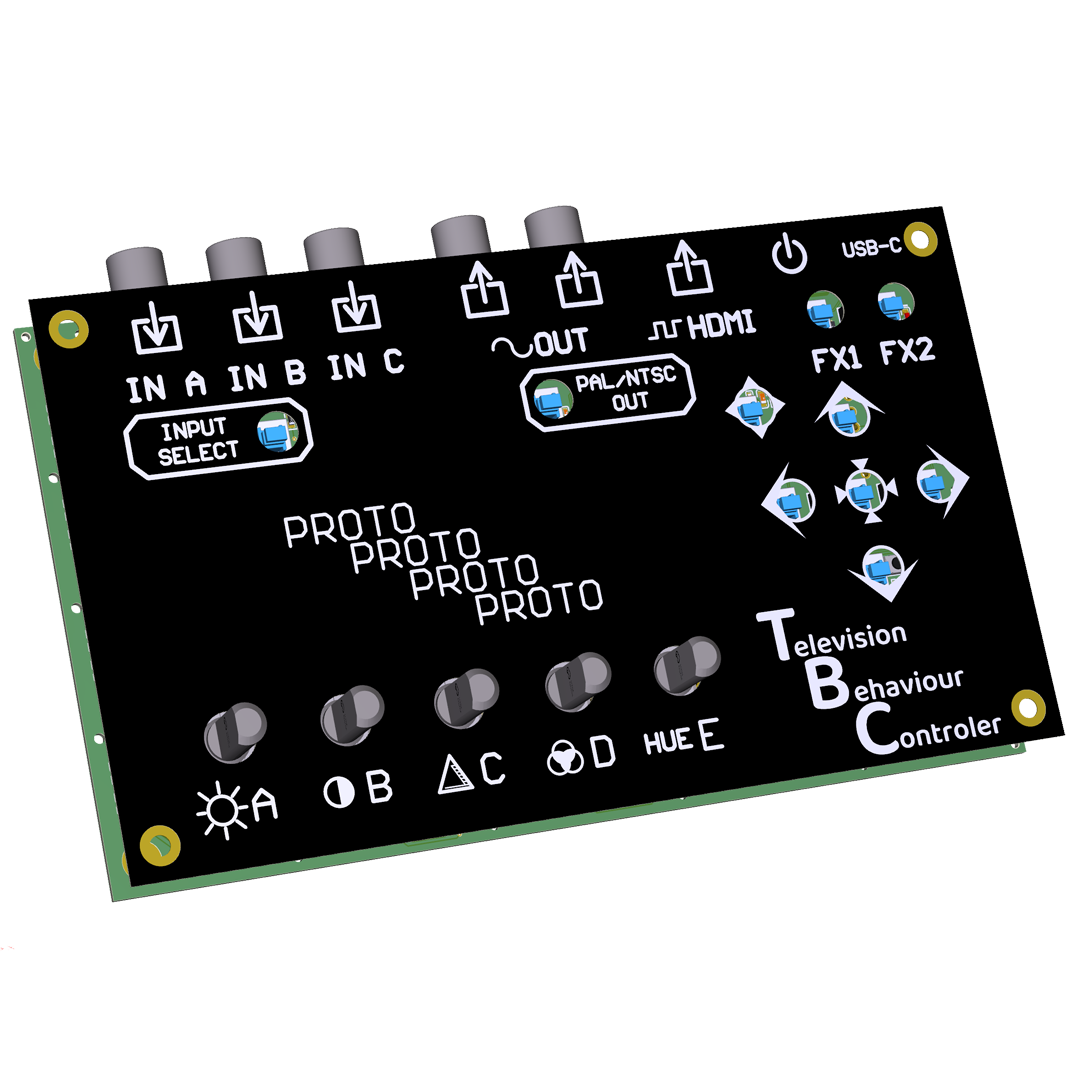
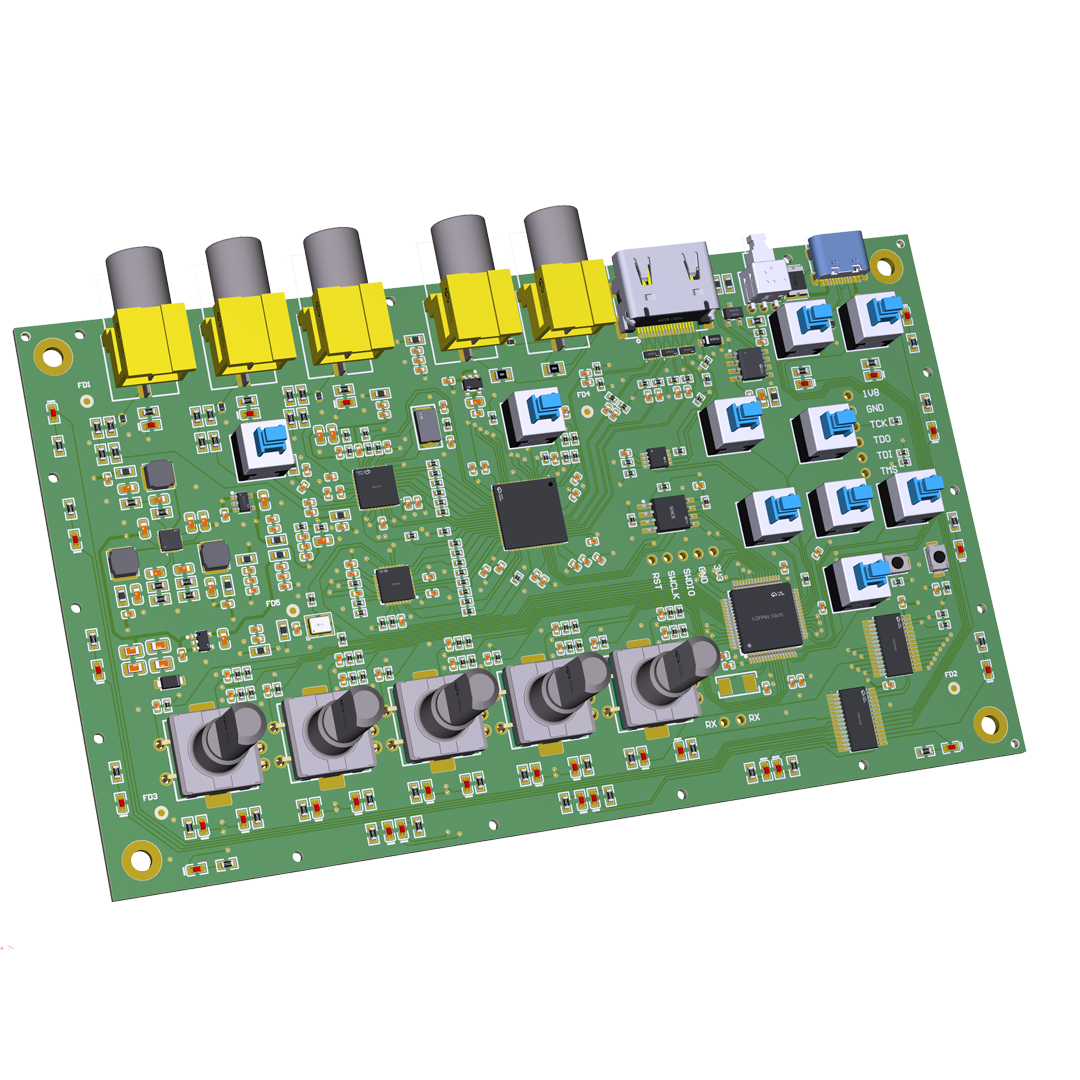
latest: PCB design done
- dev board test
- circuit design & schematic
- PCB design
- prototype manufactured
- graphical art design for UI
- testing & production revision
- production run
about this product
Why do you need a TBC?
Here's a scenario you might have found yourself in:
You're in your room, playing with all your glitch gear, connected to an old CRT TV you found by the side of the road, and everything is great. You're working on a show and getting ready to take all your gear to a venue.
On the day of the show, you get there and you're presented with a bunch of LCD TVs, an LED wall, a projector, or some combination of the three.
The projector has a composite input, so that's easy. The LCDs have HDMI inputs, but that's no problem either. You came prepared and brought an AV2HDMI adapter. No biggie.
But the problems start the moment you get everything going. Those beautiful glitches you were getting back in your room are gone. You're mostly getting blue screens over HDMI and constant interruptions over composite.
But why? You're even using composite, just like you were back home. What's the difference?
Well, the difference, my friends, lies in the receiving devices themselves. They were simply never designed to handle such heavily degraded video signals.
But why did it work on your CRT back home?
Traditional CRT TVs have very little in the way of digital signal processing. Most of the signal path, from the video input all the way to the electron guns and deflection circuitry, remains analog. When you're messing with the chroma, luma or sync of your video signal, you're manipulating signals that have a relatively direct influence on what's being drawn on the phosphor screen in front of you.
Digital devices, such as LCD TVs, projectors and capture cards, work quite differently. You're no longer directly manipulating what's being drawn on the screen. Instead, you're feeding a video decoder that digitizes and interprets your analog signal before passing it on for further processing and display.
The problem is that the way this signal is interpreted, and how errors and irregularities are handled, varies considerably from device to device.
This means you're never quite certain what you'll get out of one of these devices, if anything at all.
When designing my glitchers, I take great care to preserve the characteristics of the video signal necessary to maintain a stable picture and ensure the widest possible compatibility with digital devices. But that doesn't mean they're 100% compatible or that the results are always predictable.
And beyond my own devices, I've seen some glitchers do some truly nasty things to video signals that most LCDs wouldn't even dream of displaying.
How does the TBC fix this?
The Television Behaviour Controller takes the most important task out of the hands of your receiving device: the interpretation of the analog video signal.
At the heart of the TBC is a high-quality 10-bit ADC with 4× oversampling, specifically designed to handle composite video, including the kind of heavily degraded signals you'd typically get from old VCRs.
The incoming analog video is converted into an 8-bit ITU-R BT.656 YCbCr 4:2:2 digital video stream, which is then fed into an FPGA that does the grunt work.
The FPGA is programmed to continuously generate a stable, standards-compliant video signal for both the composite and HDMI outputs, regardless of the condition of the incoming signal.
What if the incoming sync is completely lost? No problem. We'll flywheel it, maintaining the last known synchronization timings until valid sync can be recovered.
No blue screens, no “NO SIGNAL” messages. It just keeps rolling, happily spewing out whatever trash you feed it.
Should you wish to change how the TBC interprets your video signal, you're also provided with a variety of image settings and controls, allowing you to fine-tune the results to your liking.
The result is a completely stable video output, independent of the irregularities of the incoming signal, with your glitches looking exactly the same no matter where you connect it.
The idea isn't to clean up your glitches. It's to make sure they actually reach your screen.
But there's more...
A rather nice side effect of converting analog video into a digital stream is that we now have a great deal of control over the image itself.
This means we can put some of the FPGA's remaining processing resources to good use and have a bit of fun with the signal along the way.
The TBC features a variety of built-in digital video effects, reminiscent of those early digital video effects processors used in video production and editing, all of which can be dialed in using the onboard controls.
So, besides being a solution to one of the most frustrating problems in analog video glitching, the TBC is also a creative video processing tool in its own right.
So, how far along are we with this?
There's not much speculation here. The concept was initially proven using a Tang Nano 9K development board paired with a video ADC. The core circuitry and code have already been developed, tested and proven to work.
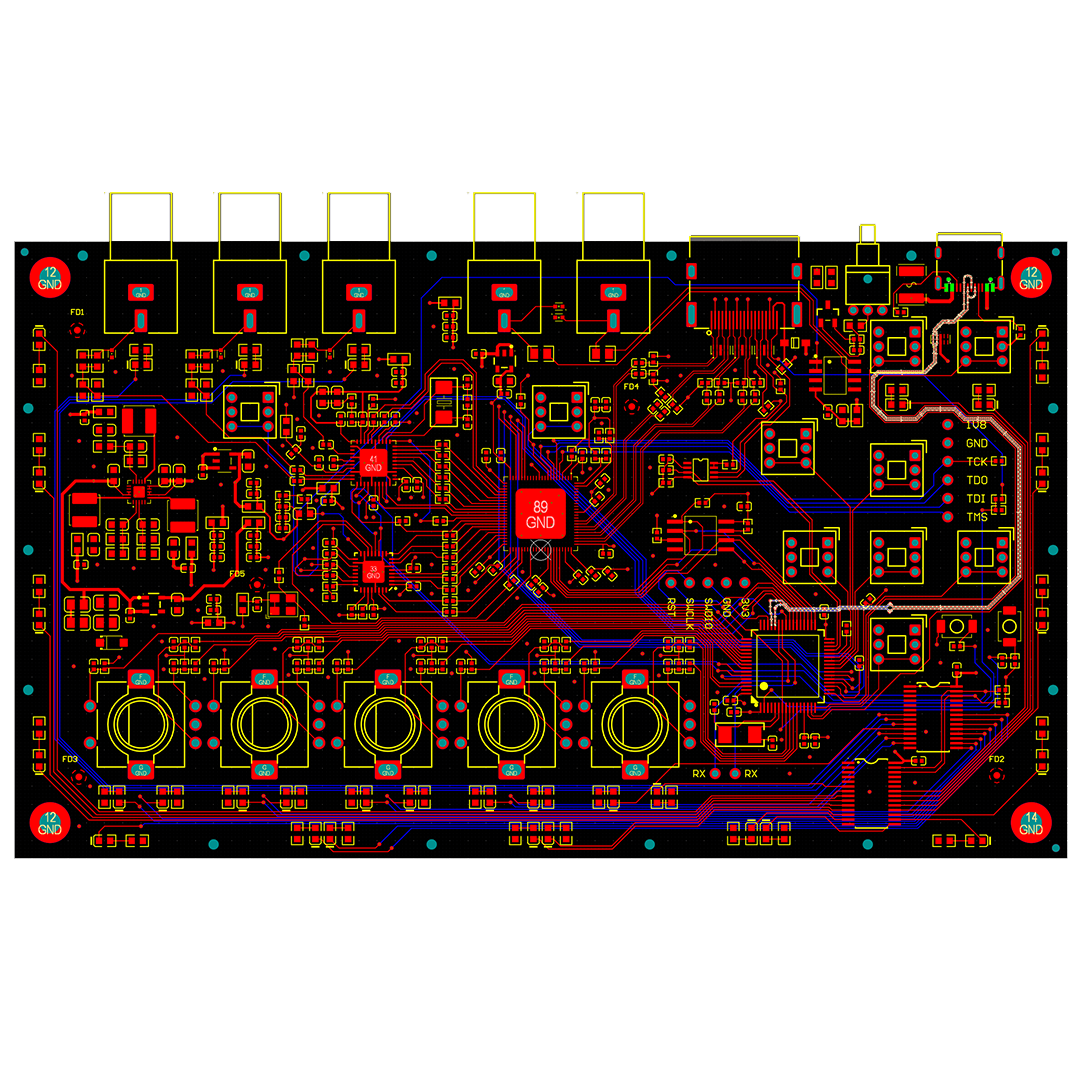
The next step was to ditch the development boards and design a dedicated PCB for the TBC. That part is also done.
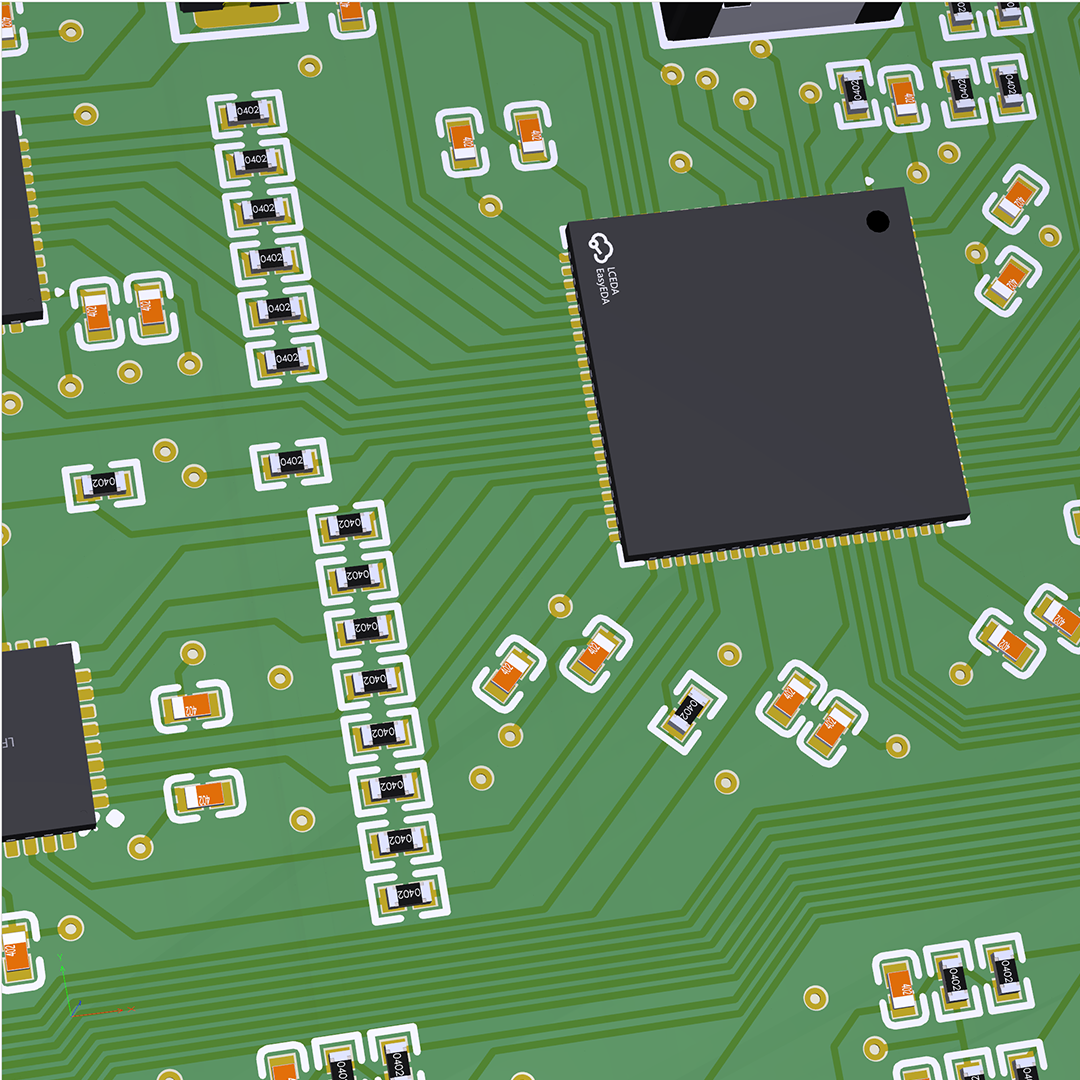
To give you a little insight into the hardware, we have a video ADC handling the incoming analog signal, which is then fed into an FPGA. The FPGA outputs the processed video through both an HDMI interface and a video DAC, the latter converting the digital stream back into analog composite video.
Supporting all of this is a microcontroller handling communication between these devices, as well as an external SPI flash memory accessible via USB, allowing you to update the device and tweak more advanced settings.
And because I can't seem to lay off the pipe and had some processing power to spare, there are over 30 individually addressable LEDs on the board, each with independent PWM control.
Why? Fuck you, that's why.
What's next?
The next step is to send the PCB off for fabrication and assembly, with just two units to begin with.
In a perfect world, these two units would work flawlessly straight out of the box, and I'd simply order a bunch more. But since we don't live in a perfect world, there will most likely be a few bugs to iron out and some improvements to make.
Once those have been addressed, REV.B will be ordered, assembled and put through its paces.
When I'm happy with everything, large-scale manufacturing (like five units a month, lol) will begin.
So, when do they ship?
I’m aiming to ship the first batch by March 2027, and given how far along we are, I reckon that’s a pretty generous estimate. I’m actually expecting to have them out the door sooner. I’ve just left myself a bit of breathing room in case testing or manufacturing turns up one of those lovely problems that takes five minutes to spot and three weeks to fix.
photos